Why AI Is Holding Up the Economy and What That Means for Semiconductors in 2026

Key takeaways from Duncan Meldrum, Chief Economist, Hilltop Economics at SEMI ISS.
The semiconductor industry is thriving, but it’s propping up an economy on shaky ground.
That was the core message from Duncan Meldrum’s presentation on the 2026 economic outlook and semiconductor risks at SEMI ISS this year. While most sessions focused on nodes, tools, and fabs, Meldrum examined the economy underneath all of it. His conclusion: AI is now holding up the broader economy, but it’s doing so on a fragile macroeconomic foundation.
Here are the ideas that stood out most:
Uncertainty is now the Dominant Macro Force
According to Meldrum, global economic uncertainty is hovering near pandemic-era levels. Not because of one shock, but because of a steady erosion in the institutional frameworks that once supported predictable growth. Rule of law, trade stability, and global governance (the invisible scaffolding of globalization) are weakening, making long-range planning materially harder for businesses.
Institutions Used to be a Tailwind, Now They’re a Friction
Since the 2008 financial crisis, the environment has shifted from encouraging cross-border trade and capital flow to constraining them. Rising market intervention, geopolitical conflict, and concerns around central bank independence are increasing the cost of capital and suppressing long-term investment. These are all headwinds for productivity and growth.
And Yet, 2026 Growth Still Looks Stable
Despite all of this, consensus forecasts still show 2026 growth roughly in line with 2025. Why? Because some powerful offsets remain, especially in the U.S.
Consumers Are Still Spending (Selectively)
Even with low overall confidence, higher-income households continue to support demand. Technology products, in particular, are behaving less like discretionary purchases and more like modern necessities, cushioning tech and semiconductor demand even as other sectors soften.
But consumer spending alone doesn’t explain the resilience. The real story is on the investment side.
The Biggest Macro Risk Is Investment, Except for One Area: AI
This is where Meldrum’s message became especially relevant for our industry. Without AI-related investment (compute equipment, data centers, and software), U.S. economic growth would have been close to zero or even negative in real terms.
In other words: AI is currently preventing a recession.
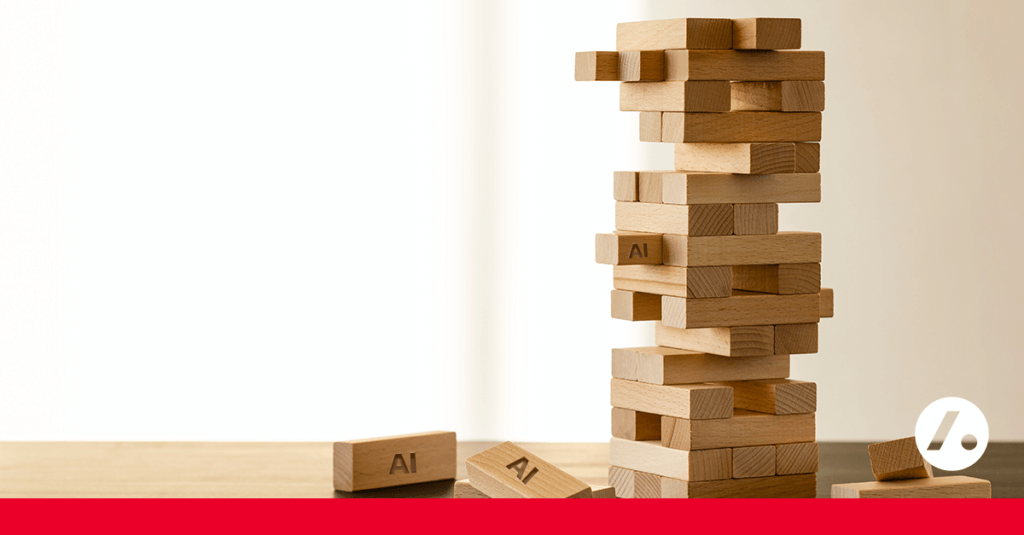
That’s extraordinary, and it also means the economy is becoming increasingly dependent on the continuation of the AI investment cycle.
What This Means for Semiconductors
For our industry, the outlook remains comparatively strong. Meldrum highlighted that semiconductor revenues are now decoupling from pure volume growth due to pricing and mix shifts driven by leading-edge AI demand.
His 2026 forecast points to approximately 12–15% semiconductor revenue growth with strong pricing and mix contribution, driven primarily by AI demand. In fact, he suggested these numbers may ultimately prove conservative given the speed and breadth of AI adoption now visible across the tech landscape.
But Here’s the Real Risk
If anything meaningfully disrupts AI investment, whether policy, capital markets, power constraints, or geopolitics, the impact won’t stop at semiconductors. It would ripple through the entire economy.
Bottom Line
AI is no longer just a growth story for semiconductors. It is now a stabilizing force for the global economy itself. That makes our industry more strategically important than ever and more exposed to macroeconomic fragility. The opportunity is massive. So is the responsibility.